

First impression is always the last impression. Whenever you visit any of your friends or relatives, a glass shower screen is one of the first things you notice when you step into a bathroom, and that’s why a murky, streaky glass shower screen is so aggravating.
Screens don’t maintain their sparkle without help, thanks to the hard water in Melbourne, daily soap residue and a hot shower. The answer is this: If you know how to clean a shower screen properly, it takes a matter of minutes a week to keep it free of streaks.
Here’s a step-by-step and easy-to-follow treatment for soap scum and water marks, mould and the bad habits that can make them a recurring problem!
Table of Contents
Why Do Shower Screens Get Dirty So Fast
The “soap scum” is due to the interaction between soap or body wash and the minerals present in the water, resulting in a sticky, filmy film that adheres to the glass.
Melbourne’s water has plenty of dissolved minerals in it which, when left to dry on the screen, turn into the chalky white marks most homeowners can identify easily. Limit airflow and add steam each day, and you have the perfect setting for mould to invade along the silicone too.
This doesn’t imply that there is a problem with your screen, but rather that glass, like all high-usage surfaces in the home, must be routinely cleaned and well maintained.
How To Clean a Shower Screen in Melbourne: A Step-by-Step Guide
Here’s a step-by-step guide on how to effectively clean a shower screen.
Step 1: Take a light spray of warm water and spray the glass before you scrub it to get rid of dirt that has stuck on the glass.
Step 2: Use a cleaning solution to clean the glass. The majority of soap scums and mineral deposits can be removed with the basic solution of warm water and white vinegar in a spray bottle. If the marks are tough to remove, just add a teaspoon of dishwashing soap to the solution. This will immensely help in adhesion and loosening any grease formed on the glass.
Step 3: Leave the solution for about 5-10 minutes. This makes it more acidic. Hence, before you start scrubbing, it breaks down the residue.
Step 4: Clean with a soft, non-abrasive cloth from top to bottom. Do not use scourers or rough materials, as they would leave marks on the screen.
Step 5: Rinse with clean water to remove any remaining residue or loosened soil from the screen.
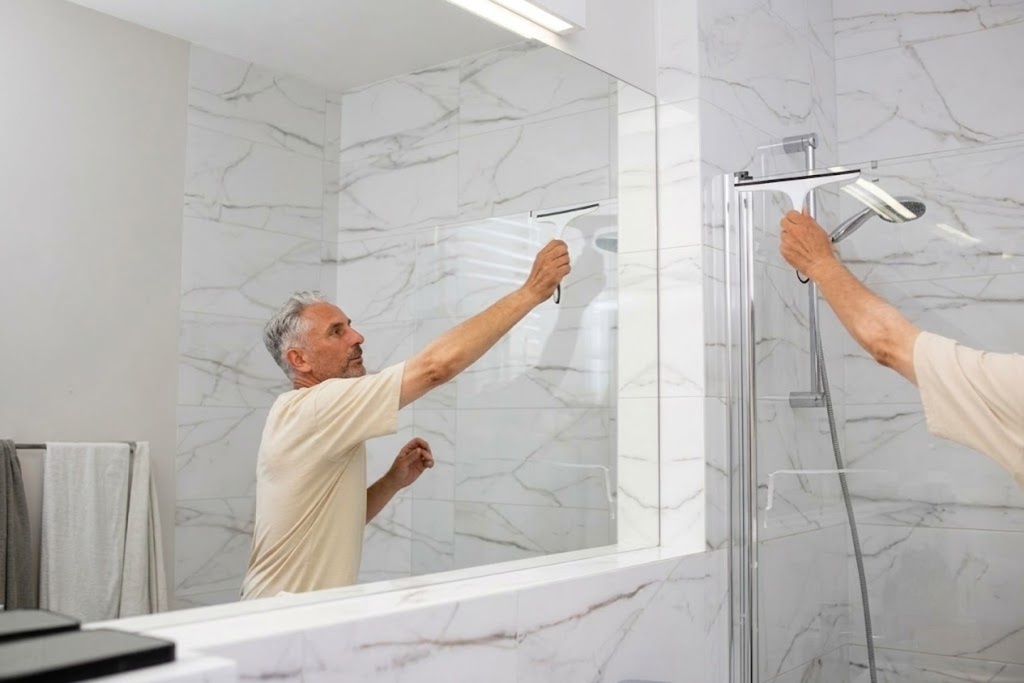
Step 6: Use a squeegee or microfibre cloth to dry the glass thoroughly and keep your shower screen streak-free.
This last step is what differentiates between a streak-free device and a spotty device.
How to Remove Soap Scum from a Shower Screen
If you need to remove soap scum from a shower screen, sometimes vinegar needs to be supplemented with bicarbonate soda for stubborn buildup. Apply a mixture of bicarbonate soda and a little water (or some dish soap if it is a really stubborn area) to the affected area, leave it on for 10-15 minutes, and then gently scrub using a soft cloth. Then rinse using water.
The soft scrubbing action of the bicarb is followed by an acid cleaning action of the vinegar rinse, which will scrub most residue that cannot be shifted by a spray and wipe. Even with either choice, it is best to do a test run on a small portion if you don’t know how it will react to the screen’s coating.
How to Remove Soap Scum from a Shower Screen
If you need to remove soap scum from a shower screen, sometimes vinegar needs to be supplemented with bicarbonate soda for stubborn buildup. Apply a mixture of bicarbonate soda and a little water (or some dish soap if it is a really stubborn area) to the affected area, leave it on for 10-15 minutes, and then gently scrub using a soft cloth. Then rinse using water.
The soft scrubbing action of the bicarb is followed by an acid cleaning action of the vinegar rinse, which will scrub most residue that cannot be shifted by a spray and wipe. Even with either choice, it is best to do a test run on a small portion if you don’t know how it will react to the screen’s coating.
Still Struggling to Remove Stubborn Marks?
If soap scum, water stains or cloudy glass continue to return, the problem may be deeper than ordinary surface buildup. The specialists at Rapid Showerscreens can inspect your shower screen and recommend the most suitable solution.
How to Remove Mould on a Shower Screen
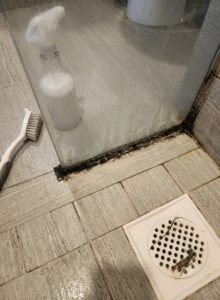
Most mould on a shower screen isn’t actually found on the glass surface but around the silicone at the base and edges, where moisture gets trapped, as this silicone is capturing moisture and organic deposits, which create an ideal habitat for mould. To treat it:
- Spray on the parts of silicone where mould is present with white vinegar and leave for 20-30 minutes.
- Gently brush with an old toothbrush. Then rinse with warm water and dry with a soft cloth.
- It is typically a sign that the silicone has aged or the seal has broken, and not a problem when cleaning – at that stage, a reseal is a more lasting solution than scrubbing repeatedly.
A real solution in the long run is good ventilation. Use the exhaust fan while taking a shower and for 20 minutes afterwards, and keep the screen open after showering to allow air to flow around and prevent moisture from being trapped against the silicone overnight.
How to Clean a Frameless Shower Screen
When you need to clean a frameless shower screen, one of its biggest advantages is that it has no metal frame to trap water, soap residue and dirt. However, as all the panel is glass, marks are more noticeable, and consistency is more important than colour. Always use a pH-neutral cleaner or a vinegar/water solution; only use soft cloth and dry the whole panel after each use. Many frameless installations are also covered in a protective coating, so be sure to choose an installation that is not so abrasive or too acidic as to wear it down sooner than it should.
Shower Screen Maintenance Tips: Keep Your Glass Always Spotless
Follow these practices religiously, and your shower screens will look spick and span always:
- Dry the shower after every use with a squeegee to keep your shower screen streak-free and reduce water marks. The one thing that can help prevent soap scum from building up and water marks is to squeegee for 30 seconds every time.
- Use liquid soap instead of bars wherever possible; there is less residue.
- Clean the glass once a week to remove soap scum from a shower screen before it hardens into stubborn residue.
- Clean monthly (tracks, hinges and silicone edges where grime accumulates out of sight).
- Inspect silicone occasionally for wear or mould in order to prevent small problems from developing into a complete reseal or replacement.
Conclusion
Knowing how to clean a shower screen will solve most everyday problems, but sometimes the issue isn’t dirt. It’s worn silicone or damaged hardware that requires professional attention. If mould on your shower screen keeps returning after proper cleaning, or the glass remains stained, it’s better to get it inspected than to keep using harsh cleaning products.
At Rapid Showerscreens, all our frameless, semi-frameless and reeded screens installed in Melbourne are supplied and fitted as one job, so should any problem arise further down the track, you are dealing with the people who installed the screen, not with multiple suppliers and tradespeople, to find out what is wrong.